Crypto Fundamentals Q4 2025: Records Hit as Prices Lag Behind
Crypto fundamentals Q4 2025 reached unprecedented highs while prices struggled. Discover why blockchain metrics soared despite market stagnation.

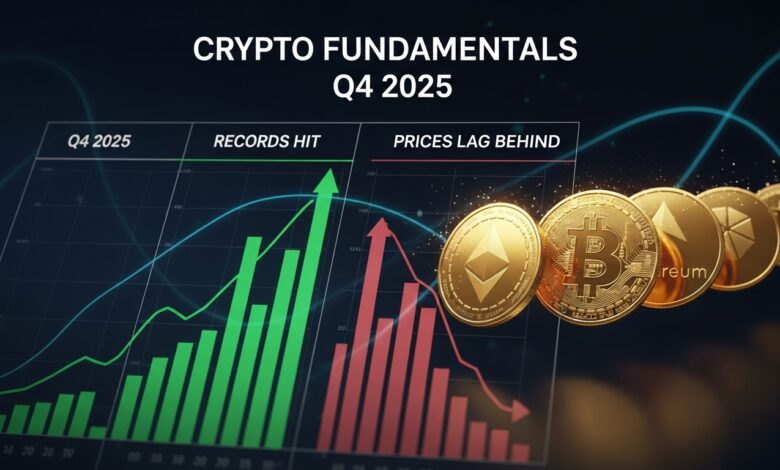
Crypto fundamentals Q4 2025 shattered previous records across multiple blockchain networks, token prices remained stubbornly subdued, creating one of the most intriguing disconnects between underlying technology adoption and market valuations in the industry’s history. This divergence has left investors, analysts, and blockchain enthusiasts questioning whether traditional price discovery mechanisms still accurately reflect the true health of decentralized networks.
Throughout October, November, and December of 2025, blockchain networks experienced unprecedented levels of activity. Transaction volumes surged, active wallet addresses multiplied, total value locked in decentralized finance protocols reached new peaks, and developer activity accelerated across major ecosystems. Yet despite these robust cryptocurrency fundamentals in late 2025, digital asset prices failed to keep pace, with many top-tier tokens trading sideways or declining throughout the quarter. This phenomenon challenges conventional wisdom about the relationship between network utility and token appreciation, forcing market participants to reconsider their valuation frameworks.
Disconnect Between Network Growth and Token Prices
The gap between blockchain fundamentals and cryptocurrency prices during the fourth quarter of 2025 represents more than just temporary market noise. This divergence reflects fundamental shifts in how digital assets are being utilized, valued, and integrated into broader financial systems. Traditional market dynamics that once governed cryptocurrency valuations have evolved as institutional adoption, regulatory clarity, and technological maturation have transformed the landscape.
Network activity metrics tell a compelling story of accelerated adoption. Daily active addresses across major blockchain networks increased by substantial margins compared to previous quarters, with Ethereum processing record numbers of daily transactions and layer-two scaling solutions handling volumes that exceeded many observers’ projections. Bitcoin’s network hashrate continued its relentless climb, demonstrating unwavering security infrastructure investment even as price action remained muted. These indicators of genuine usage and infrastructure commitment traditionally correlated strongly with price appreciation, making their recent decoupling particularly noteworthy.
The cryptocurrency market dynamics Q4 2025 also featured significant developments in stablecoin adoption and circulation. Total stablecoin market capitalization expanded dramatically throughout the quarter, suggesting growing demand for blockchain-based payment rails and dollar-denominated digital assets. This expansion occurred primarily on established networks like Ethereum, Solana, and Tron, further validating the utility thesis while token prices for these platforms remained range-bound.
Breaking Down the Record-Setting Blockchain Metrics
When examining Q4 2025 blockchain network activity, several categories of metrics reached unprecedented levels. Transaction throughput across multiple chains suggested mainstream adoption was accelerating rather than plateauing. Ethereum’s transition to a more scalable architecture, combined with widespread layer-two adoption, enabled the network to process transactions at scales previously considered impossible for decentralized systems.
Decentralized finance remained a primary driver of network utilization. Total value locked across DeFi protocols surpassed previous all-time highs, with billions of dollars worth of digital assets secured in smart contracts facilitating lending, borrowing, trading, and yield generation. The sophistication of these protocols improved substantially, with risk management frameworks, insurance mechanisms, and regulatory compliance features becoming standard components of leading platforms. This maturation attracted institutional capital that might have previously avoided the space due to infrastructure concerns.
Non-fungible token activity also contributed significantly to network usage, though the nature of NFT applications evolved considerably from previous cycles. Rather than focusing primarily on digital collectibles and art, cryptocurrency adoption trends Q4 2025 showed NFTs being increasingly utilized for real-world asset tokenization, identity verification, credentialing, and supply chain management. These practical applications drove sustained transaction volumes without the speculative frenzy that characterized earlier NFT markets.
Developer activity metrics painted an equally optimistic picture. GitHub commits to major blockchain repositories increased throughout the quarter, with thousands of developers actively building applications, infrastructure improvements, and tooling enhancements. The number of active developers working on blockchain projects reached record levels, suggesting the talent pool supporting these networks had expanded substantially. This development activity occurred across diverse ecosystems, from established platforms to emerging layer-one alternatives, indicating broad-based technological advancement rather than concentration in a few dominant chains.
Why Cryptocurrency Prices Failed to Reflect Fundamental Strength
Macroeconomic conditions played a significant role in suppressing risk asset valuations broadly. Global interest rate environments, inflation dynamics, and economic growth concerns affected investor appetite for speculative investments, including cryptocurrencies. Even as blockchain networks demonstrated genuine utility and adoption, the broader risk-off sentiment in traditional financial markets created headwinds that overwhelmed positive fundamental developments. Institutional investors, who had become increasingly important price-setters in cryptocurrency markets, maintained cautious positioning amid economic uncertainty.
Regulatory developments also influenced market psychology throughout the quarter. While long-term regulatory clarity generally benefits the cryptocurrency industry, the process of implementing new frameworks created short-term uncertainty. Various jurisdictions introduced compliance requirements, reporting obligations, and operational standards that, while ultimately beneficial for legitimacy and institutional participation, temporarily dampened speculative enthusiasm. Market participants focused on navigating these evolving requirements rather than aggressively accumulating positions.
Supply dynamics contributed to price stagnation in ways that diverged from previous market cycles. Token unlock schedules released substantial quantities of previously restricted tokens into circulation throughout Q4 2025 cryptocurrency market, creating consistent selling pressure that absorbed buying demand. Early investors and team members in numerous projects reached vesting milestones, leading to profit-taking that outweighed new capital inflows. Additionally, miners and validators continued selling tokens to cover operational expenses, adding to the available supply regardless of price levels.
The maturation of cryptocurrency markets also meant that price discovery mechanisms had become more efficient and less prone to euphoric overvaluation. Sophisticated market participants employed quantitative models, fundamental analysis frameworks, and risk management disciplines that prevented the kind of speculative excess that characterized earlier bull markets. This increased market efficiency, while positive for long-term stability, reduced the explosive price movements that previously rewarded early adopters and risk-takers.
Institutional Adoption Versus Retail Speculation
One of the defining characteristics of crypto fundamentals hitting records in Q4 2025 was the shifting composition of market participants. Institutional adoption accelerated substantially, with corporations, financial institutions, and government entities increasingly integrating blockchain technology into their operations. However, this institutional involvement focused primarily on infrastructure utilization rather than speculative token accumulation.
Major corporations launched blockchain-based supply chain tracking systems, payment processing networks, and customer loyalty programs that generated significant on-chain activity without necessarily requiring large token purchases. Financial institutions experimented with tokenized securities, cross-border payment systems, and settlement infrastructure that utilized public blockchains while minimizing exposure to volatile native tokens. This utilization-focused adoption drove fundamental metrics higher without creating proportional buying pressure on underlying assets.
Retail speculation, conversely, remained subdued compared to previous market cycles. Individual investors who had experienced significant losses during previous downturns approached the market with greater caution and skepticism. The proliferation of alternative investment options, from traditional equities to new asset classes, meant cryptocurrency faced stiffer competition for retail capital. Additionally, improved education and awareness meant retail participants were less susceptible to hype-driven narratives and demanded stronger fundamental justification for investment decisions.
The blockchain technology adoption Q4 2025, therefor,e reflected a healthy but price-neutral development pattern. Networks were being utilized for genuine economic activity rather than purely speculative positioning, creating sustainable long-term growth prospects even if short-term price action remained disappointing for token holders.
Layer-Two Solutions and Scaling Infrastructure
The explosion in layer-two blockchain adoption in late 2025 represented one of the quarter’s most significant fundamental developments. Scaling solutions that operated atop base-layer blockchains like Ethereum processed transaction volumes that dwarfed their underlying networks, demonstrating the viability of layered blockchain architectures for mainstream applications.
These layer-two networks achieved transaction costs measured in fractions of a cent while maintaining security guarantees inherited from their base layers. This cost efficiency unlocked use cases previously impractical on blockchain systems, from micropayments and gaming transactions to frequent trading and social media interactions. The user experience improvements that accompanied these technical advances removed significant friction that had previously hindered mainstream adoption.
Interestingly, the success of layer-two solutions created complex implications for native token valuations. While increased activity on layer-two networks validated the underlying blockchain architecture and drove some transaction fees to base layers, the economic value capture mechanisms remained unclear. Users could transact extensively on scaling solutions while generating minimal fee revenue for base-layer token holders, potentially explaining some of the disconnect between activity levels and token prices.
The cryptocurrency infrastructure development Q4 2025 extended beyond layer-two solutions to include improvements in wallet technology, custody solutions, and cross-chain interoperability protocols. These infrastructure enhancements reduced barriers to entry and improved security for users, contributing to higher adoption metrics even as they failed to catalyze immediate price appreciation.
Decentralized Finance Maturation and Institutional Integration
Decentralized finance protocols achieved remarkable maturation during Q4 2025 DeFi growth, with total value locked reaching new peaks despite modest token price performance. This apparent contradiction reflected fundamental changes in how DeFi protocols generated and distributed value.
Leading DeFi platforms implemented revenue-sharing mechanisms, governance improvements, and risk management frameworks that made them increasingly attractive to institutional capital. Banks, asset managers, and corporate treasuries began allocating funds to DeFi lending protocols, yield aggregators, and liquidity provision strategies, attracted by transparent risk parameters and competitive returns. This institutional participation drove total value locked higher while individual protocol tokens failed to capture proportional value.
The competitive dynamics within DeFi also intensified throughout the quarter. New protocols launched with innovative mechanisms and improved capital efficiency, fragmenting liquidity and user attention across an expanding ecosystem. This competition benefited users through better rates and services while preventing any single protocol from achieving the network effects that might drive significant token appreciation. The decentralized finance trends late 2025 thus favored ecosystem health over individual project dominance.
Regulatory engagement with DeFi protocols accelerated during the quarter, with several platforms implementing compliance features and working with authorities to establish operational frameworks. While this regulatory integration legitimized the sector and enabled institutional participation, it also reduced the permissionless, censorship-resistant characteristics that had previously attracted certain user segments. This evolution represented a necessary trade-off between mainstream adoption and ideological purity, with implications for both usage metrics and token valuations.
Stablecoin Growth and Payment Infrastructure
Perhaps no segment better illustrated the disconnect between cryptocurrency utility and price performance than stablecoins. These dollar-pegged digital assets experienced explosive growth throughout Q4 2025, with circulation expanding dramatically as businesses and individuals increasingly utilized blockchain-based payment rails.
Stablecoin transaction volumes on major networks regularly exceeded those of native tokens, demonstrating clear preference for price-stable digital assets for actual commerce and value transfer. Cross-border payment providers, remittance services, and e-commerce platforms integrated stablecoin payment options, creating genuine utility and driving network activity. This usage validated blockchain technology’s value proposition for payments while generating minimal demand for volatile native tokens.
The networks that hosted these stablecoins benefited from increased transaction fees and demonstrated utility, theoretically supporting their fundamental value. However, the relatively small fee revenue generated per transaction, combined with competition among multiple chains for stablecoin issuers, meant this activity failed to translate into substantial token price appreciation. The blockchain payment infrastructure Q4 2025 thus became increasingly robust while token valuations remained suppressed.
Central bank digital currency developments also influenced the stablecoin landscape, with several nations advancing CBDC initiatives that could eventually compete with private stablecoins. While these government-issued digital currencies remained largely experimental, their potential future impact created uncertainty around the long-term competitive position of private stablecoins and the networks hosting them.
Enterprise Blockchain Adoption and Private Networks
Corporate adoption of blockchain technology accelerated throughout Q4 2025 enterprise blockchain usage, though much of this activity occurred on private or permissioned networks rather than public blockchains. Major corporations implemented distributed ledger technology for supply chain tracking, inventory management, cross-organizational data sharing, and internal process automation.
While these private blockchain implementations validated the underlying technology and demonstrated its practical utility, they generated minimal activity on public networks and created no buying pressure for associated tokens. The disconnect between private enterprise adoption and public blockchain activity contributed to the divergence between technology validation and token price performance.
Some enterprises did utilize public blockchains for specific use cases requiring transparency, immutability, or interoperability with external parties. These implementations contributed to fundamental metrics like transaction counts and active addresses while typically involving minimal token purchases. Corporations generally preferred to minimize balance sheet exposure to volatile digital assets while still leveraging blockchain technology benefits.
The business blockchain integration late 2025 therefore represented a double-edged development for cryptocurrency markets. It validated blockchain technology’s value proposition and suggested long-term staying power, but it also demonstrated that significant blockchain adoption could occur without proportional token demand. This realization forced market participants to reconsider simplistic narratives linking technology adoption directly to token appreciation.
Mining and Network Security Investments
Bitcoin’s network security reached unprecedented levels during Q4 2025 Bitcoin fundamentals, with hashrate climbing to new all-time highs despite relatively stagnant price action. This continued investment in mining infrastructure demonstrated long-term confidence in the network’s value proposition, even as short-term price performance disappointed.
The sustained growth in computational power securing the Bitcoin network reflected several factors. Energy costs in certain regions remained favorable for mining operations, technological improvements in mining hardware enhanced efficiency, and institutional mining operations continued expanding capacity. These miners maintained long-term perspectives focused on block rewards and transaction fees expected over multi-year horizons rather than quarter-to-quarter price fluctuations.
However, the growing hashrate also meant that mining profitability remained under pressure for many operations. Marginal miners faced challenging economics, leading to consistent selling pressure as they liquidated mined bitcoin to cover operational expenses. This structural selling absorbed buying demand and contributed to price stagnation even as the network’s fundamental security strengthened.
Ethereum’s transition to proof-of-stake fundamentally altered its security model, with the total value staked reaching new peaks throughout the quarter. This staking activity locked substantial quantities of ETH from circulating supply, theoretically creating upward price pressure through reduced available supply. However, staking rewards also created consistent selling pressure as validators realized yields, offsetting some of the supply reduction benefits.
Developer Activity and Protocol Improvements
The cryptocurrency development activity Q4 2025 reached remarkable levels across major blockchain ecosystems. Thousands of developers contributed to core protocol improvements, application development, and infrastructure tooling, creating a robust foundation for future growth.
Major protocol upgrades shipped during the quarter introduced significant technical improvements. Ethereum implemented several enhancement proposals that improved transaction efficiency and user experience. Solana continued refining network stability and introducing features that addressed previous reliability concerns. Newer layer-one platforms launched mainnet versions of their protocols, expanding the competitive landscape and providing developers with additional platform options.
This development activity validated the long-term viability of blockchain technology and suggested that innovation continued regardless of short-term price action. However, the relationship between developer activity and token prices proved more complex than simple correlation. Networks with substantial developer communities didn’t necessarily command price premiums, as the market struggled to quantify the value of ongoing development versus immediate network effects or revenue generation.
Open-source development also meant that innovations on one platform could be rapidly adapted by competitors, reducing the exclusivity and competitive moats that might justify significant price premiums. The blockchain innovation Q4 2025 therefore created ecosystem-wide value that didn’t necessarily concentrate in individual tokens.
Market Structure Evolution and Price Discovery
The maturation of cryptocurrency market infrastructure throughout Q4 2025 crypto market structure fundamentally altered price discovery mechanisms. Sophisticated trading platforms, derivatives markets, and institutional service providers created more efficient markets that reduced the volatility and explosive moves that characterized earlier cycles.
Futures and options markets for major cryptocurrencies achieved substantial liquidity, enabling hedging strategies that dampened spot market volatility. Institutional traders utilized these derivatives to manage risk and execute complex strategies that would have been impossible in less developed markets. This sophistication improved market efficiency but reduced the likelihood of rapid price appreciation disconnected from underlying fundamentals.
The proliferation of trading venues and liquidity sources also created more competitive market dynamics. Arbitrage opportunities disappeared quickly as algorithmic traders connected multiple exchanges and ensured price consistency. This efficiency benefited market participants through tighter spreads and better execution but eliminated some of the inefficiencies that had previously created opportunities for outsize returns.
Custody and prime brokerage services for institutional investors reached maturity levels comparable to traditional financial markets. This infrastructure enabled institutional participation but also meant that large investors could execute sophisticated strategies including short positions, volatility arbitrage, and relative value trades that added complexity to price dynamics beyond simple supply and demand.
Looking Ahead: Implications for Future Market Cycles
The divergence between crypto fundamentals and prices in Q4 2025 carries significant implications for future market cycles and cryptocurrency valuations. This disconnect suggests that the relationship between network adoption and token appreciation has become more nuanced than early cryptocurrency advocates anticipated.
Markets may be entering a phase where fundamental strength manifests gradually in valuations rather than through explosive price movements. This maturation would align cryptocurrency markets more closely with traditional asset classes where fundamental improvements typically drive steady appreciation rather than speculative bubbles. While less exciting for traders seeking rapid gains, this evolution could attract institutional capital seeking predictable risk-return profiles.
The quarter’s developments also highlighted the importance of distinguishing between technology adoption and token demand. Blockchain technology can achieve widespread utilization without necessarily driving proportional demand for native tokens, particularly if usage occurs on layer-two solutions, through stablecoins, or on private networks. Future valuations may need to focus more precisely on value capture mechanisms rather than usage metrics alone.
Regulatory clarity emerging from various jurisdictions should eventually reduce uncertainty and enable more straightforward institutional participation. As compliance frameworks solidify and operational requirements become standard practice, the regulatory overhang that suppressed valuations during the quarter should diminish. This clarity could unlock institutional capital that remained sidelined amid regulatory ambiguity.
Conclusion
For investors and industry participants, this divergence presents both challenges and opportunities. Those focused exclusively on short-term price movements found Q4 2025 frustrating despite record-setting fundamental metrics. However, those building for long-term sustainability recognized that genuine adoption and technological advancement create durable value that should eventually manifest in valuations. The quarter demonstrated that blockchain network growth and cryptocurrency prices can diverge temporarily, but fundamental strength ultimately provides the foundation for sustainable appreciation.
As blockchain technology continues evolving and integrating into mainstream financial and business systems, the focus should remain on building useful applications, improving infrastructure, and creating genuine value for users. These fundamental improvements create the conditions for long-term success, even if they don’t immediately trigger explosive price movements. The future of cryptocurrency markets likely involves closer alignment between fundamental metrics and valuations as market efficiency improves and speculative excess diminishes.
Are you ready to navigate the evolving landscape where crypto fundamentals Q4 2025 matter more than ever? Stay informed about blockchain development, focus on projects with genuine utility, and build positions based on fundamental analysis rather than speculation. The divergence between adoption and prices won’t persist indefinitely, and those who recognize value when fundamentals outpace valuations position themselves for long-term success. Follow developments in cryptocurrency fundamentals closely and make informed decisions based on network activity, adoption metrics, and technological progress rather than short-term price movements alone.
See more; Trump’s New Meme-Coin Sparks Anger in Crypto World